
Bas Krins: 40 years of inventing in polymers, fibres and yarns
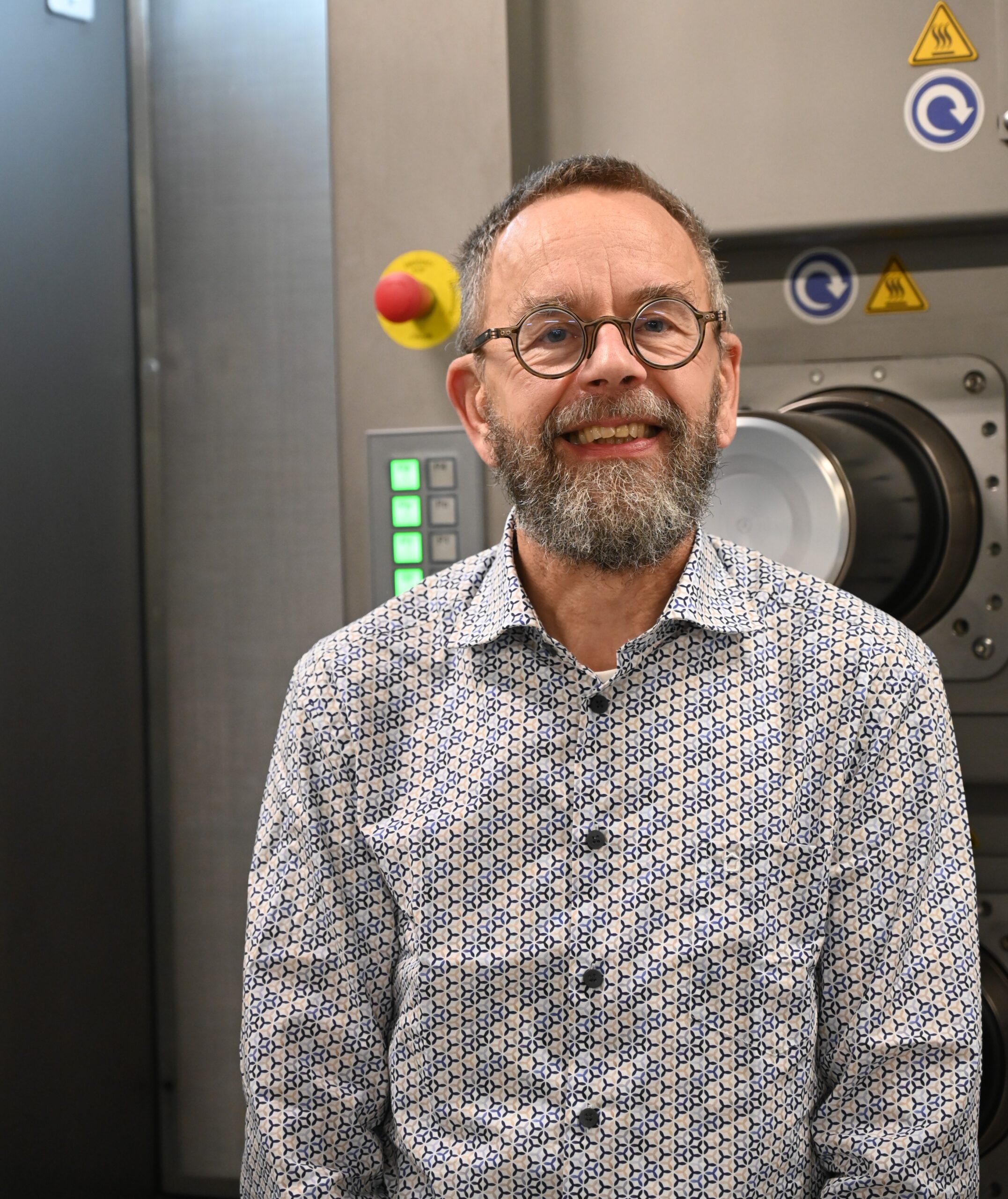
For forty years, Bas Krins has been working at the frontier of polymers, fibres and yarns. From large-scale research at AKZO in the 1980s to pioneering new biodegradable materials at Senbis today, his career has revolved around one thing: solving technical problems that have never been solved before. As Innovation Director at Senbis, Bas still finds himself fascinated by the same challenge that attracted him to research at the beginning of his career. How do you take a problem for which no ready-made answer exists and turn it into something that actually works?
From AKZO Research to Senbis
Bas started his career at AKZO Research in 1986. At the time, AKZO operated a large central research institute in Arnhem with more than a thousand employees. With a technical background and a strong interest in research, Bas chose to specialise in polymers and yarns.
Although the company name changed several times, Bas’ work followed a remarkably continuous path. AKZO became Akzo Nobel, the fibre activities later continued under Acordis and, from 2003, under Diolen Industrial Fibers. Throughout these transitions, Bas remained in the same field, while his expertise continued to grow and evolve.
The research environment of the 1980s was very different from what it is today. Teams were much larger and companies invested heavily in fundamental research.
“The most important thing I learned was how to set up research in such a way that you arrive at solutions nobody has thought of before. That, to me, is the real definition of inventing.”
Although the available resources have changed, Bas believes the essence of innovation has remained the same: understanding a problem, thinking beyond existing solutions and designing experiments that create new knowledge.
Turning an idea into a factory
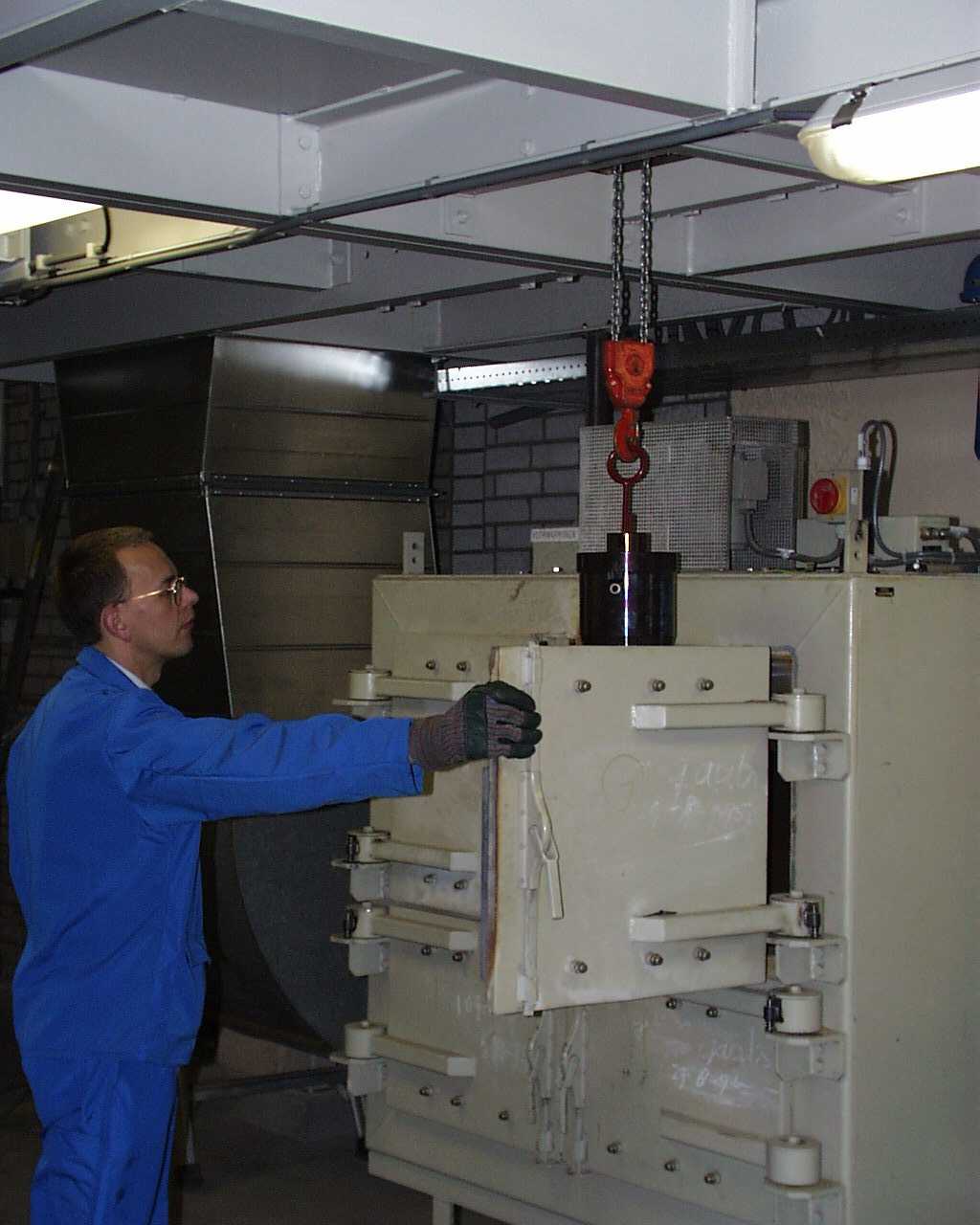
Over the course of his career, Bas has worked on countless development projects, but one still stands out. Together with colleagues, he helped develop an entirely new technology for producing polyester yarn for car tyres. What started as a fundamental idea eventually resulted in several patents and the construction of a complete production facility in Emmen.
“Going from a basic idea that was revolutionary enough to be patented several times to a complete factory was an incredible experience.”
The technology became highly successful. At its peak, the factory produced around 70% of the tyre yarn manufactured in Europe. For Bas, that project remains one of the defining experiences of his career.
Innovation is teamwork
Despite his reputation as an inventor, Bas is quick to point out that innovation is rarely an individual achievement. His work combines several highly specialised disciplines, including compounding, filament extrusion and yarn spinning. Combining these disciplines creates many possibilities, but also considerable technical complexity. That makes teamwork essential.
“Inventing is teamwork by definition. You need people who come up with creative ideas, but also people who can turn those ideas into experiments, evaluate the results and understand what they mean.”
One colleague who played an important role in Bas’ career was Hans Boer. Their personalities and working styles were very different, but that was precisely why they worked so well together. Hans excelled at unconventional ideas and practical solutions, while Bas translated those ideas into structured experiments and helped organise the equipment, resources and support needed to make them happen. Together, they worked on some of the most successful innovations of Bas’ career. For him, it is a perfect example of what a good R&D team should look like: people with different strengths who complement one another.
Starting again after 2008
A major turning point came in 2008, when Diolen went bankrupt. After more than twenty years of working within organisations that had evolved from the original AKZO activities, Bas suddenly found himself without a job. Instead of walking away from the research facilities and knowledge that had been built up over decades, Bas and two colleagues decided to explore whether the research activities could continue independently.
Within days, the idea became a company: Applied Polymer Innovations (API), was founded. The company started with twelve people, and only four months later, it had generated enough revenue to pay their salaries. For Bas, it meant learning an entirely new set of skills.
“I was an inventor, not an entrepreneur. Suddenly I had to learn how to run a company, create turnover, find customers and lead people.”
Finding customers proved to be one of the biggest challenges. API had to create its own market, establish new contacts, attend conferences and build a reputation from scratch. It took around a year and a half before a company contacted API without first having been approached by the team. That foundation eventually developed into what is now Senbis.
From research to sustainable products
Senbis has continued to evolve since then as it also started developing its own products over time. An early example was PLA filament for 3D printing. What started as a research request grew into a dedicated production activity and later into the spin-off Innofil3D.
Today, Senbis combines contract research through Senbis Polymer Innovations with the development of its own sustainable applications through Senbis Sustainable Products.
One example is biodegradable trimmer line. The development process took around seven years, because the requirements are demanding: the line has to withstand extremely high mechanical loads during use, while also being able to biodegrade after particles enter the environment.
“We were the first in the world to develop a biodegradable line for this application. It took seven years, so that says something about how challenging it was.”
Another recent project focuses on biodegradable materials for ropes used in Danish seine fishing. These ropes are dragged along the seabed and must therefore be highly wear-resistant. At the same time, any material that wears away should ideally biodegrade.
Senbis developed a material that met the biodegradability requirements while showing even better wear resistance than the material currently used.
“Within all the restrictions you have in terms of material selection, achieving better wear resistance as well as biodegradability really is a small Eureka moment.”
The material has already shown promising results in initial tests. The next step is to secure funding for larger and longer field trials using complete fishing systems and multiple vessels.
Creating an environment to experiment
For Bas, successful innovation requires more than expertise. It also requires an environment in which people feel free to experiment. That is something he really encourages at Senbis.
Researchers should be able to try another material, modify a setup or quickly test an unusual idea. Sometimes that means working with sophisticated laboratory equipment. Sometimes it means screws, tape and whatever else happens to be available.
“If you want to develop something beyond common technology, you need an environment that encourages people to be creative and simply try things.”
Not every experiment succeeds, of course. Bas is well known among colleagues for his “Friday afternoon experiments”. One attempt to produce a magnetic filament for 3D printing ended with the extrusion machine completely blocked. The team eventually had to dismantle the machine piece by piece before Bas felt comfortable going home.
“It is all part of the process. For every thing that works, there are probably more than ten things that do not. We just tend to tell the successful stories more often.”
Still surprised after forty years
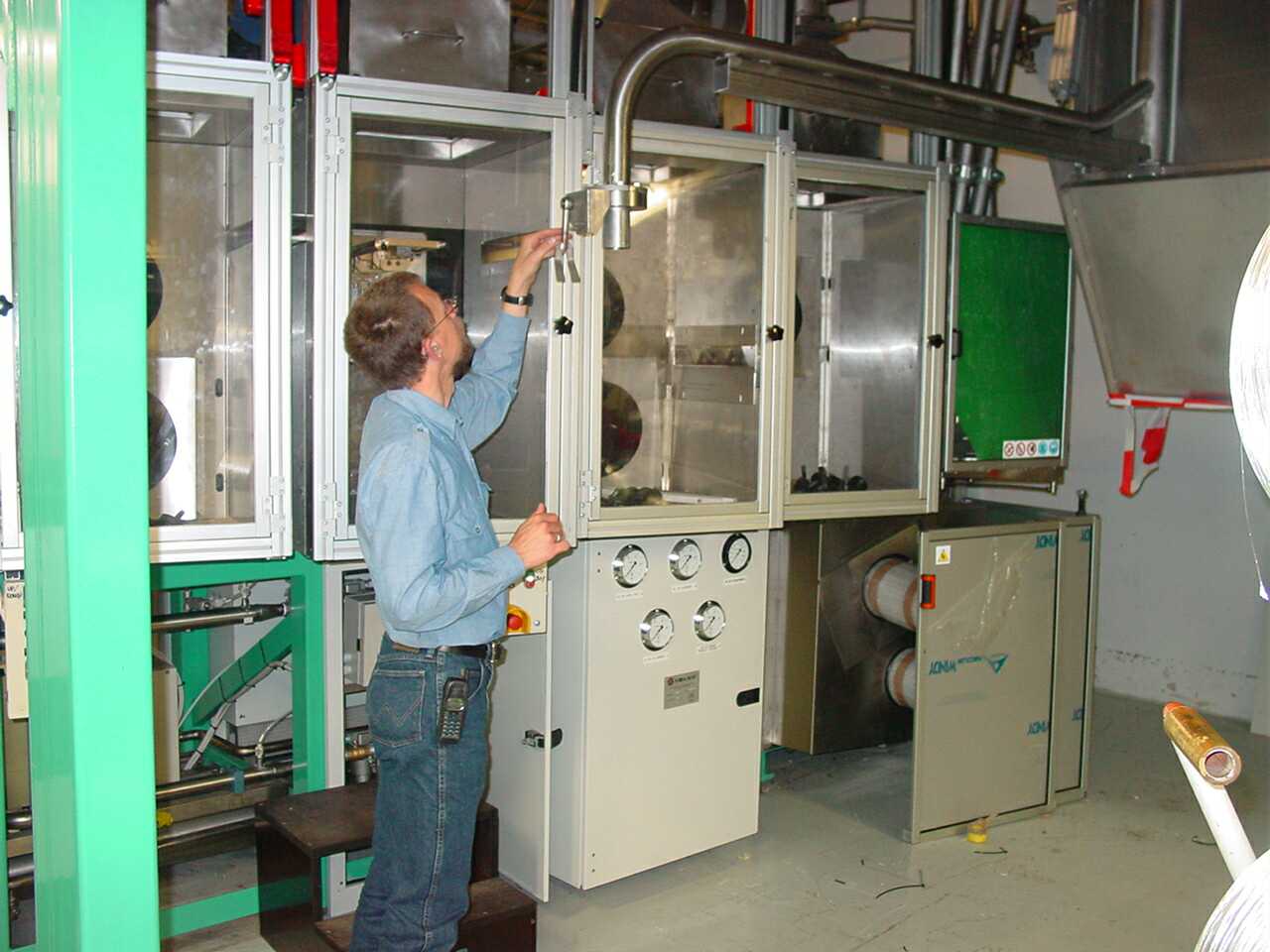
What keeps Bas interested after four decades is that customers still manage to surprise him with applications he has never considered before. One example was a project involving violin strings, which suddenly required him to investigate how materials influence sound.
“I am still surprised by the questions customers bring to us. You suddenly get an application you have never thought about before and have to figure out how to approach it.”
There are still challenges he wants to solve as well. One of them is the plastic bristles used in street-sweeping brushes. These brushes wear quickly and release plastic particles into the environment. Bas believes there is an opportunity to develop a better solution.
“The first step was understanding why nobody has solved it yet. Now, my ambition is to be the first in the world to do it.”
Passing on a way of thinking
With forty years of experience behind him, Bas has accumulated extensive technical knowledge. But that is not necessarily what he considers most important to pass on to younger researchers.
“Polymer knowledge can be found in a book. The important thing is learning how to work towards a solution that nobody in the world has thought of before. That way of thinking is what I want to pass on.”
It is a philosophy that has connected every stage of his career, from the enormous AKZO research organisation of the 1980s to the much smaller and highly specialised team at Senbis today.
“The equipment, budgets and markets may have changed, but the challenge has not. There is always another problem to solve, another experiment to try and another idea waiting to become an invention.”

Research & Development

Our Compounds

Mariva
