
Senbis and AI to tackle clothing microplastics with biodegradable polyester
Finding a biodegradable substitute for polyester in clothing is considered the holy grail in the fight against plastic pollution. The Dutch R&D company Senbis aims to bring one to the market by 2030. For the first time, artificial intelligence (AI) is being used to significantly speed up the entire development process.
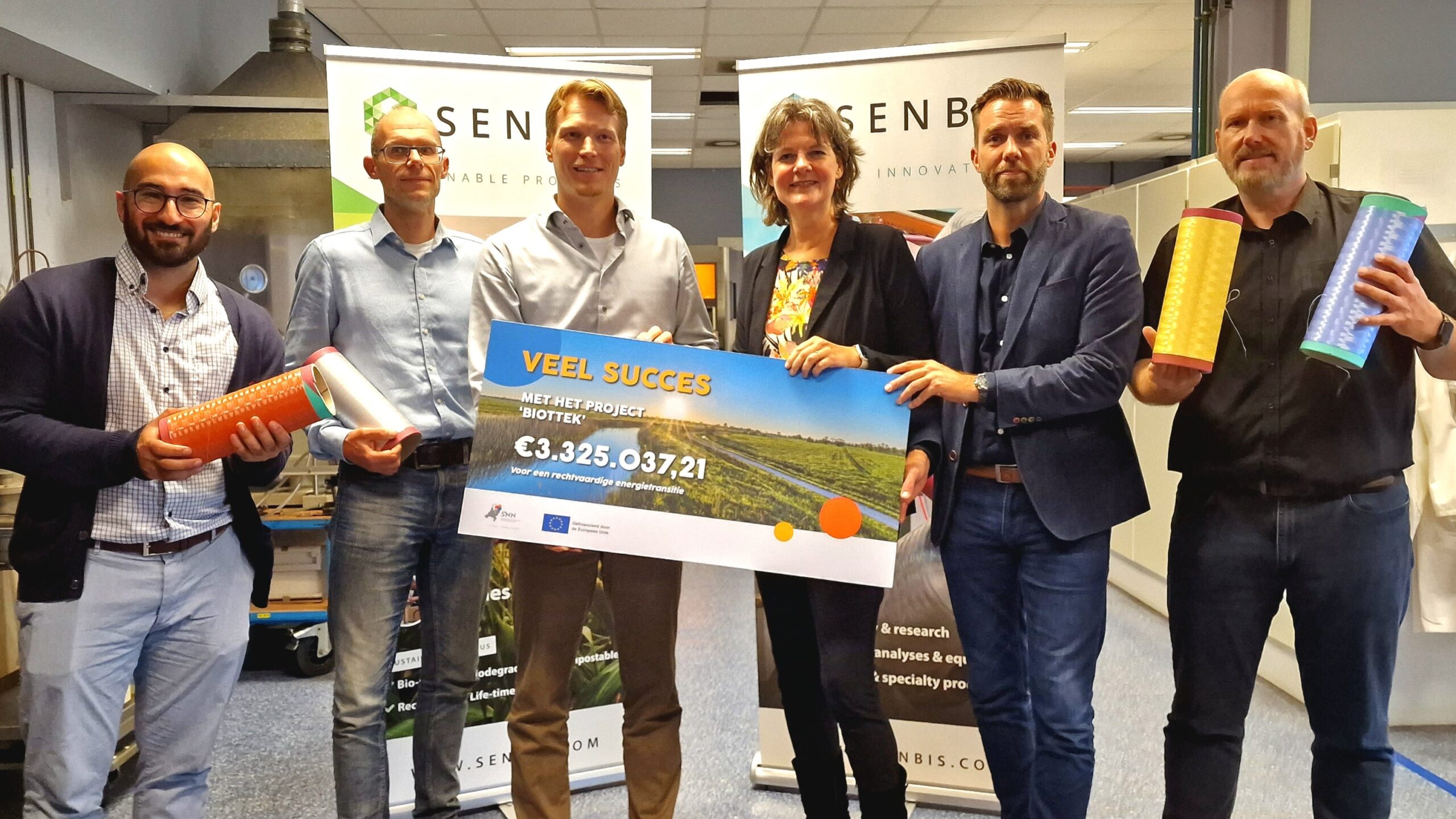
Every year, the world produces 30 million tons of polyester for clothing. Through washing and wear and tear, a large portion of this ends up in the environment as microplastics, in the oceans, and ultimately in fish, food, and our bodies. Through the BIOTTEK project, Senbis wants to develop a biodegradable alternative for polyester in clothing to combat this large-scale pollution. It is doing so in collaboration with a consortium that includes the University of Groningen (RUG), NHL Stenden University of Applied Sciences, Wageningen Food & Biobased Research of WUR, and TNO. The consortium is investing 6.6 million euros in the development of a biodegradable polyester. Last October, it received a 3.3 million euro grant from the EU’s European Just Transition Fund (JTF).
Affordable alternative
“Polyester is the most widely used material in our clothing, and its use is growing. This creates a colossal problem worldwide. Our main goal is therefore to find a solution for all that microplastic pollution,” says Senbis director Gerard Nijhoving. “The bioplastics currently on the market are not suitable for making a good yarn to replace polyester in textiles. Another widely used material—cotton—is biobased, but when you look at how much water and pesticides are needed to grow it, it is not all that sustainable. So a new polymer is needed that is massively scalable, allowing you to eventually reach the price point of polyester. Otherwise, you won’t be able to serve the huge market demand.”
AI can help
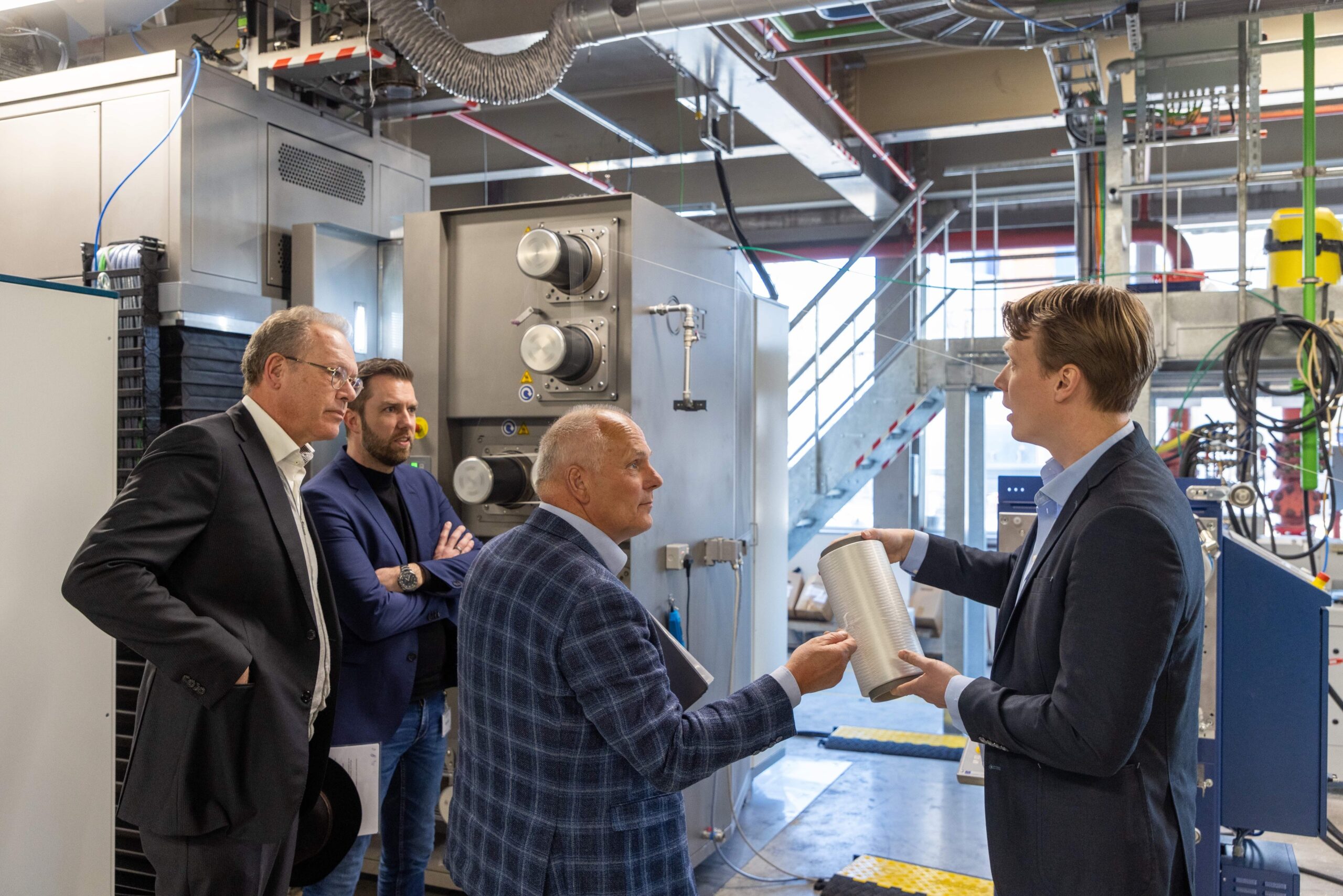
Inventing and scaling up a new plastic (or polymer) is time-consuming and a long-term endeavor. Nijhoving points, for example, to the Dutch company Avantium, which has been working on this for twenty years. Only now is the company building a large factory for its FDCA, a raw material for PEF. This is a fully plant-based plastic alternative to PET. To accelerate this process, Senbis is deploying artificial intelligence (AI) for the first time. To this end, the company has sought collaboration with TNO, which uses AI and algorithms to find the most suitable bioplastics. This works as follows: currently, knowledge and ideas about new plastics reside in the heads of scientists and chemists, who investigate them further through trial and error. “But no one has all the data in their head and can see all correlations. AI can do that,” Nijhoving says. “We feed the model with all kinds of relevant polymers we already know and their relevant properties. AI can recognize all correlations between them, draw conclusions from them, and suggest new structures that have precisely the properties we want.”
Completely new
Thanks to AI, Senbis can thus see much faster whether a material resembles polyester, is biodegradable, and is not too expensive to make. According to Nijhoving, the request to TNO came at exactly the right time. The knowledge institute had just proposed the idea of using AI in the development of new materials. “The method of developing a new type of bioplastic using AI is completely new. In industry and in the world. If this succeeds, we will not only have successfully developed a new bioplastic, but we will also have developed a new methodology to accelerate all kinds of innovations in the future,” Nijhoving says.
Scaling up faster
Senbis Polymer Innovations—as its official name goes—loves solving plastic pollution problems. Among other things, it develops biodegradable plastics for nets and ropes for fishermen and mussel farmers, biodegradable threads and ropes for agriculture and horticulture, and biodegradable granules for artificial turf sports fields. The company is actually a continuation of AkzoNobel’s former R&D department in the field of yarn and fibers. The R&D activities are carried out by Senbis Polymer Innovations BV, and since 2021, the newly developed products have been sold by Senbis Sustainable Products BV. The company does not build its own factories, but develops materials in its R&D laboratories and test facilities, having them manufactured and marketed by existing factories under license or through contract manufacturing.
“We use existing factories and raw materials that are already available. That limits you in your search, but it means you don’t have to build new factories. Building those takes a very long time and costs a lot of money. Because of those kinds of boundary conditions, you can scale quickly and it quickly becomes affordable,” Nijhoving explains.
Own expertise
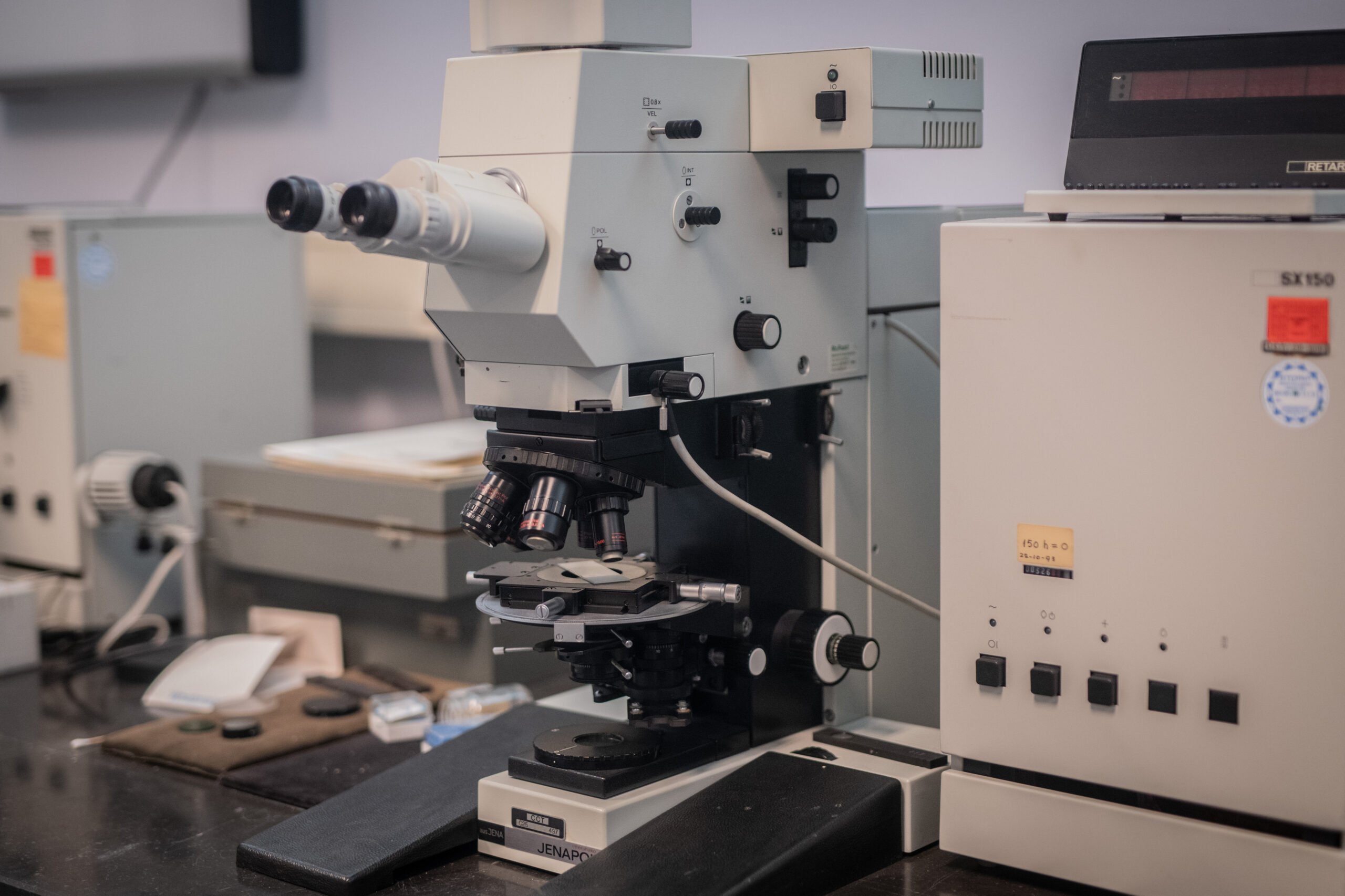
The partners in the BIOTTEK consortium each contribute to the research in their own way. “We brought them together because of their unique expertise,” Nijhoving says. Senbis itself handles the bulk of the research. TNO provides the AI. RUG was brought on board because it has a large chemistry faculty with extensive lab capacity and many researchers who can help search for a new polymer. NHL Stenden has a hybrid department where students at various levels conduct research, for example into the recyclability of the new biopolymer. WUR investigates biodegradability by bacteria and fungi. Such tests take months to years. Because all variants of a biopolymer must be tested, the research can take a very long time. WUR has therefore built special reactors in which many different samples can be tested simultaneously. “That also yields major time savings,” Nijhoving says.
Entering the market in 2030
The first promising materials for biopolymer have already been found, although they are still in the researchers’ minds. Nijhoving expects BIOTTEK to be able to select the first good candidates by the end of 2025 to scale up and test yarn quality during spinning. That is the goal of BIOTTEK, which will conclude with this phase. Subsequent research will focus on scaling up and improving the biopolymer. Garments must be made from it. After that, many more improvement phases will follow before the material can enter the market. Nijhoving: “Then you are ready to conquer the world. Ultimately, my ambition is to be able to say in 2030: this is the polymer, this works, this is scalable. Now we will look with major industrial parties to see if they can manufacture the new biopolyesters on a large scale under license in their factories. I think this is a realistic timeline. If this succeeds, it will have been much faster than what typical chemical start-ups achieve.”
Green Chemistry Accelerator
This year, Senbis was one of five participants in the Green Chemistry Accelerator program (GCA) of Groene Chemie Nieuwe Economie (GCNE). This platform strives for circular chemistry with innovative technologies, without fossil fuels and raw materials, and with zero CO2 emissions by 2050. The GCA program was set up together with Invest-NL and Regional Development Agencies (ROMs) to help start-ups scale up into full-fledged companies. So that they can build pilot plants, enter the market, and ultimately produce thousands of tons of raw materials for recycled or biobased plastic.
Innovation funnel
Although Senbis is somewhat further along than other start-ups, it wants to scale its technology and grow rapidly just like them. Questions then arise, such as: how do you build a team in chemistry? What does the entire ecosystem around your product look like? Nijhoving has gained a lot of knowledge in this area. Together with experts, he also drew up a so-called innovation funnel. The R&D company receives many more ideas for innovations than it can handle. “So we have to filter them. Then they enter the hopper, or funnel. Our R&D staff quickly get enthusiastic when a great idea comes in that we can technically work on. But you also have to answer other questions. Is the market big enough? Is there a willingness to pay extra for green alternatives? Are there any patents in the way? Such a funnel makes things much calmer and allows us to be increasingly critical. You can’t do everything. That is now embedded in a process, and that model is what GCA helped us build.”
More news
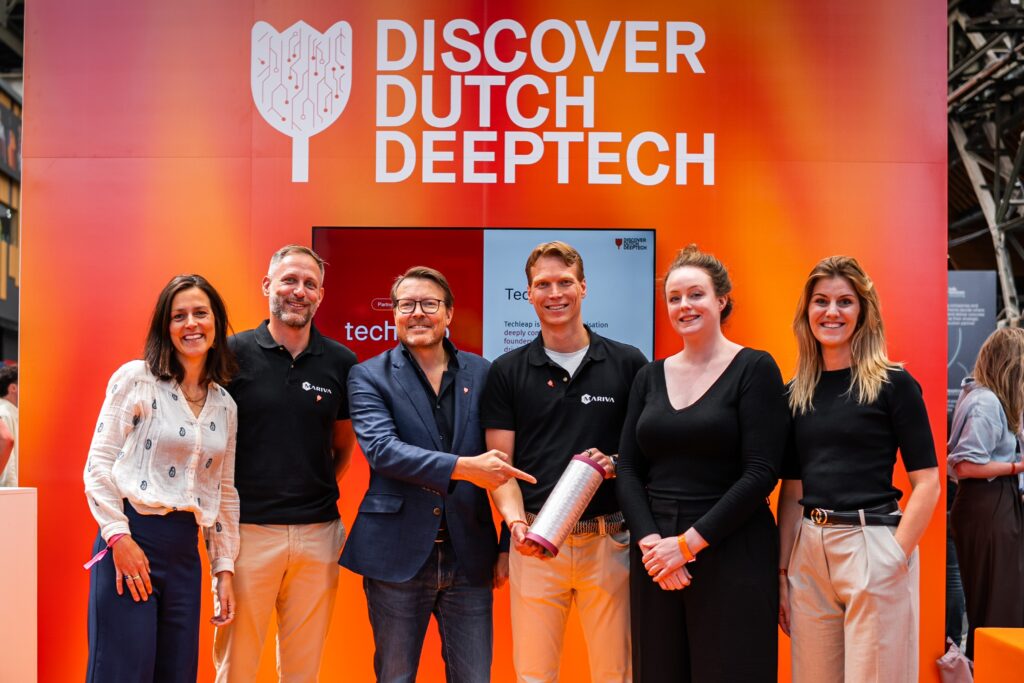
Senbis Group spinoff Mariva Materials secures funding to advance sustainable materials development
Mariva Materials B.V. welcomes Future Tech Ventures and VP Capital as new investors to accelerate next-generation bio-based performance fibres
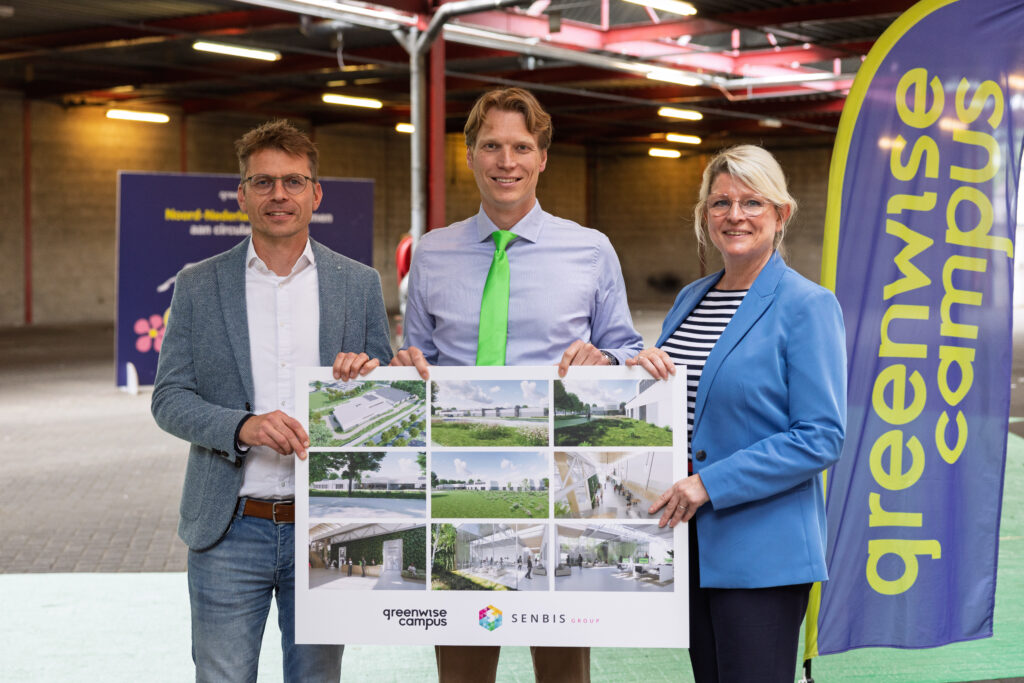
Letter of Intent: Greenwise Campus and Senbis
By signing a letter of intent, Senbis Polymer Innovations is combining its innovative strength with Greenwise Campus at the innovation center.
Project: Senbis Next Step
As an innovative and sustainable company, Senbis Polymer Innovations B.V. aims to strengthen its strategic HR policy to better realize its mission: delivering biodegradable..

Research & Development

Our Compounds

Mariva